Sample board automotive buck converter — 12 V to 5 V on two layers, in WireFrame EDA

A small open-source MAX17574 buck converter for 12 V vehicles, imported from KiCad into WireFrame EDA — fully routed, ground poured on both sides, clean DRC, and what to look at on a board this size.

Sample board automotive buck converter — 12 V to 5 V on two layers, in WireFrame EDA

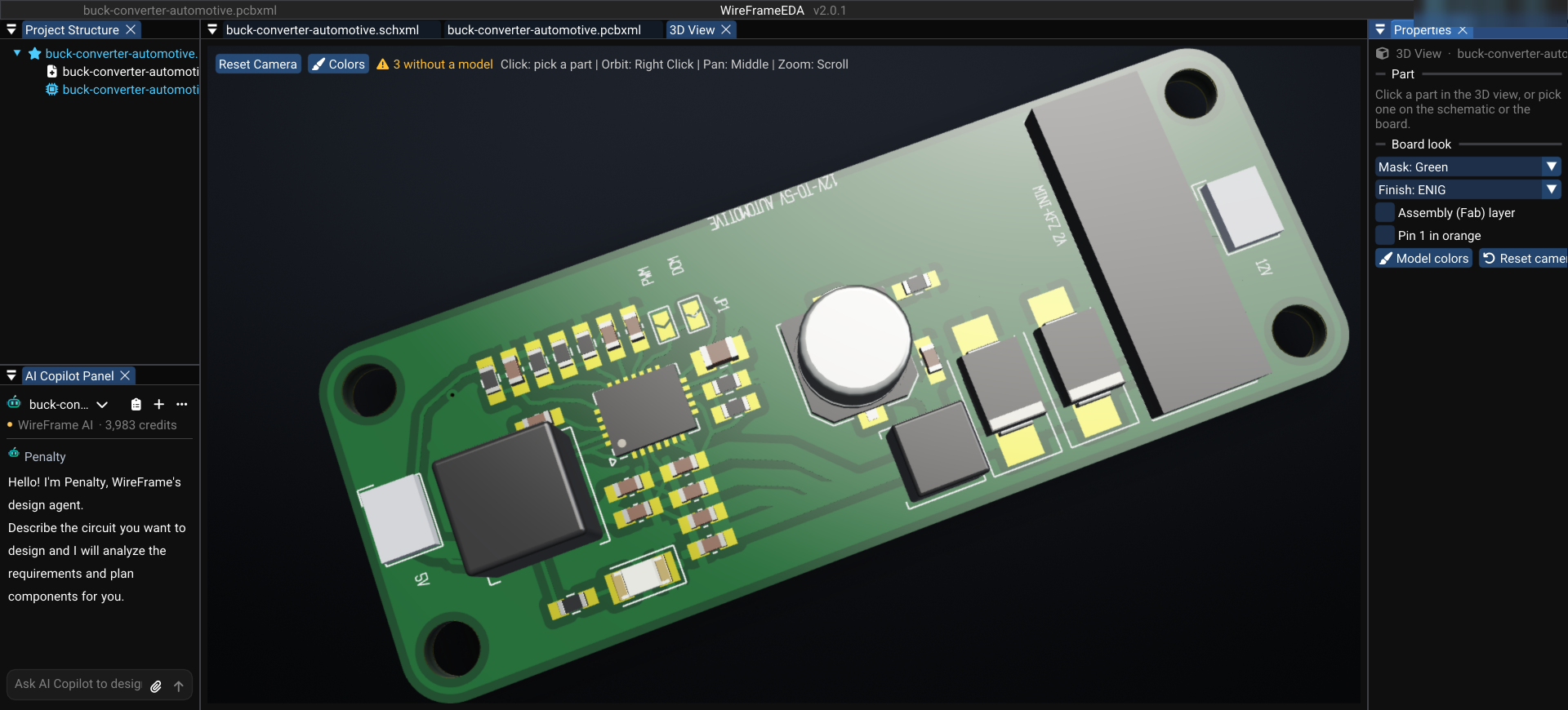
Not every good example is a big board. This automotive buck converter by MG-5 turns a car's 12 V into 5 V with a MAX17574 synchronous buck controller, on a 59 × 22 mm two-layer board with 36 parts. It is the board the WireFrame user guide uses for its PCB chapters, because everything on it is visible at once.

What is on it#

Block Parts
Input protection F1 fuse, D1/D2 SMBJ20A TVS diodes
Input filter L1 15 µH, C1–C7
Converter U1 MAX17574, L2 33 µH output inductor, C8–C13
Options JP1/JP2 solder jumpers (DCM, PWM mode)
Indicator D3 blue LED
Connectors J1 12 V in, J2 5 V out

Opening it#

buck-converter-automotive.kicad_pro is a KiCad 8 project; File › Import › KiCad Project (.kicad_pro, .pro)… brings it in.
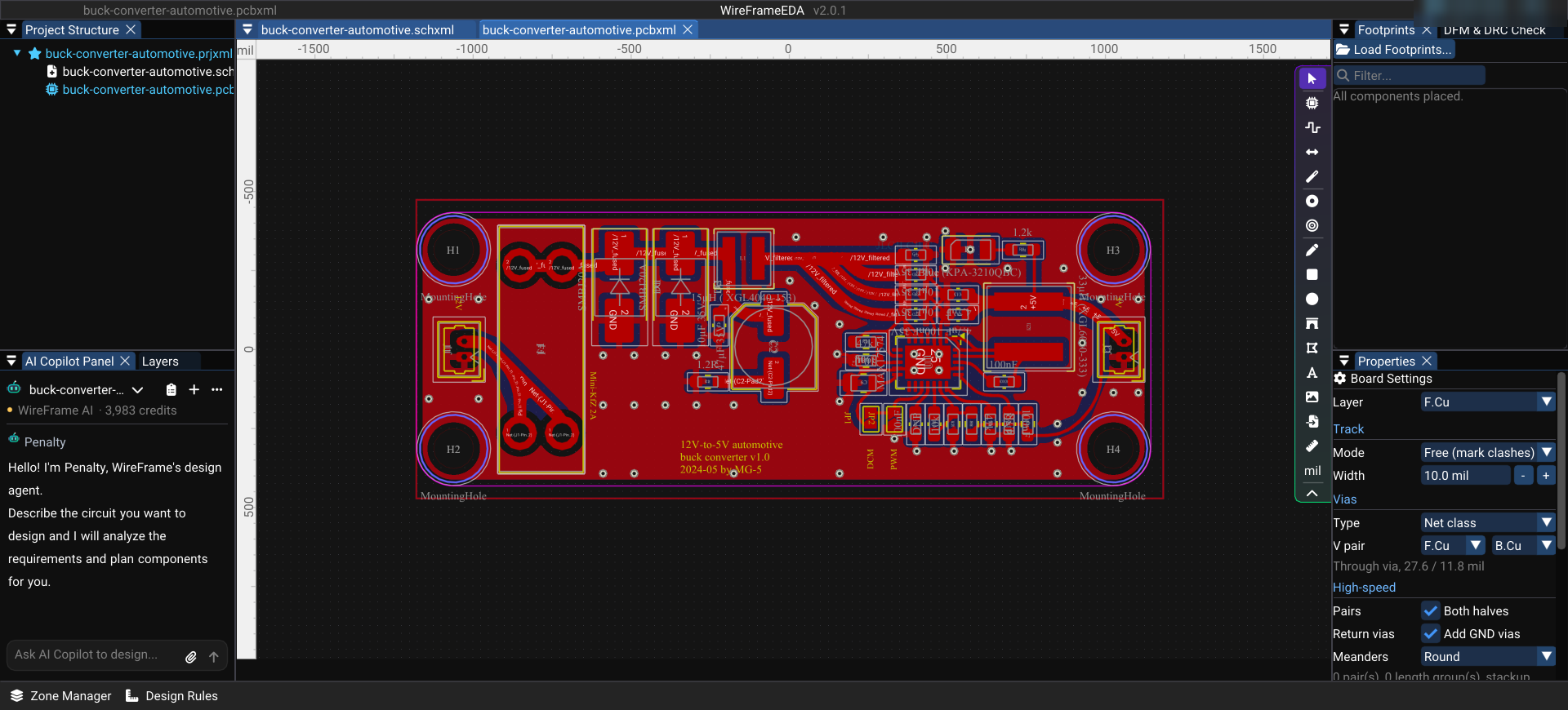
The automotive buck converter in WireFrame EDA — top copper, ground poured around everything

For members

Keep reading — it’s free

Sign in or create a WireFrame account to read the rest of this post and every guide on the blog.

  • The rest of this post — about 2 min of reading
  • The same account signs in the WireFrame desktop app
  • Free design tools, no time limit

Sign in to WireFrame

One account for the desktop app and this site.
or with email
Forgot password?

Related posts

KiCad to WireFrame EDA and back: 72/72 round trips identical

Open a KiCad project in WireFrame EDA, work on it and export it back to KiCad: what comes across, what to check, and how the round trip was measured.

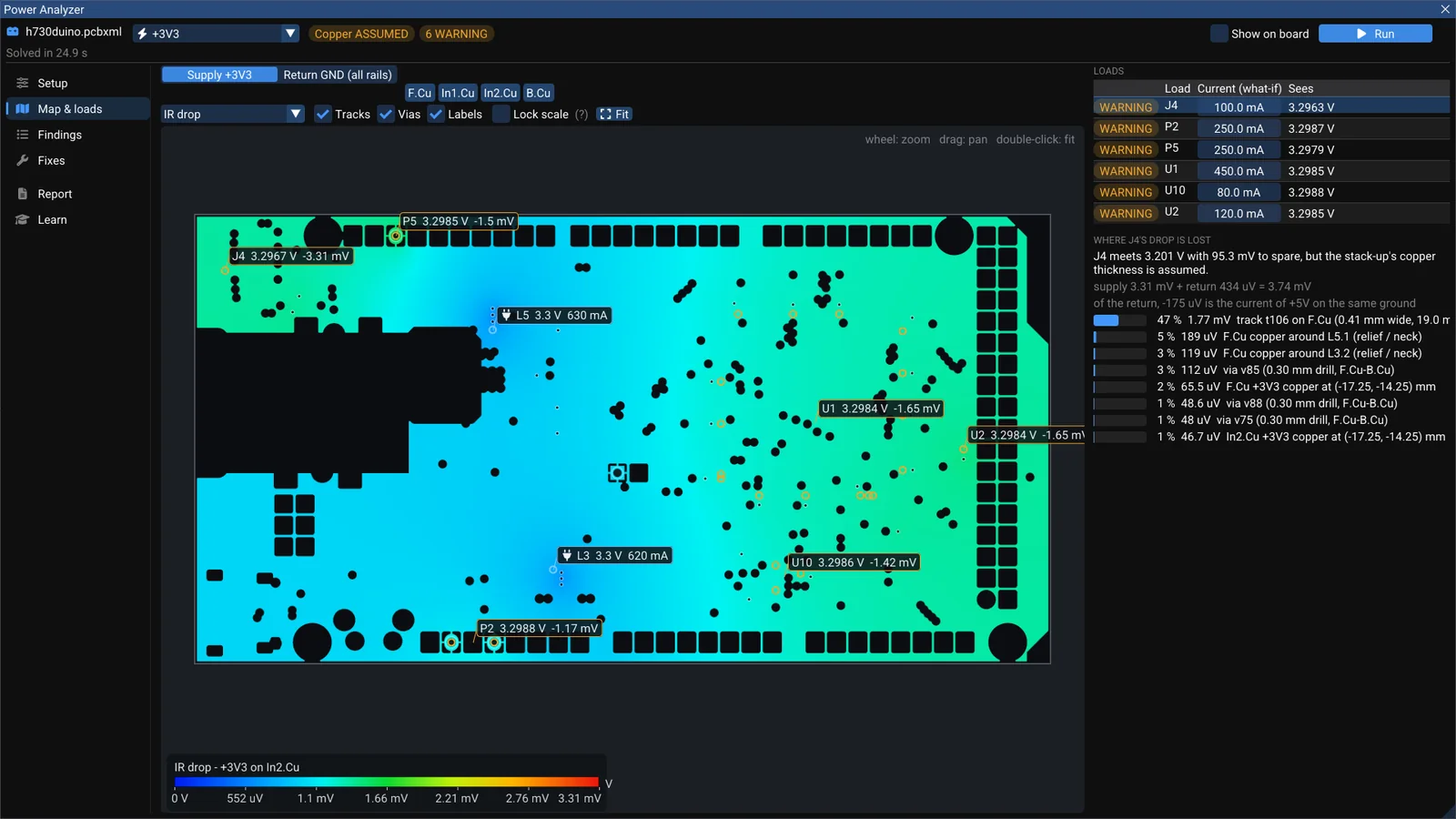
Where does your 3.3 V go? DC IR drop on a real board

WireFrame's Power Analyzer solves a rail's real copper — supply and return — and splits each load's voltage drop exactly over the tracks, necks and vias that cause it. A walk through the +3V3 rail of the open-source h730duino.

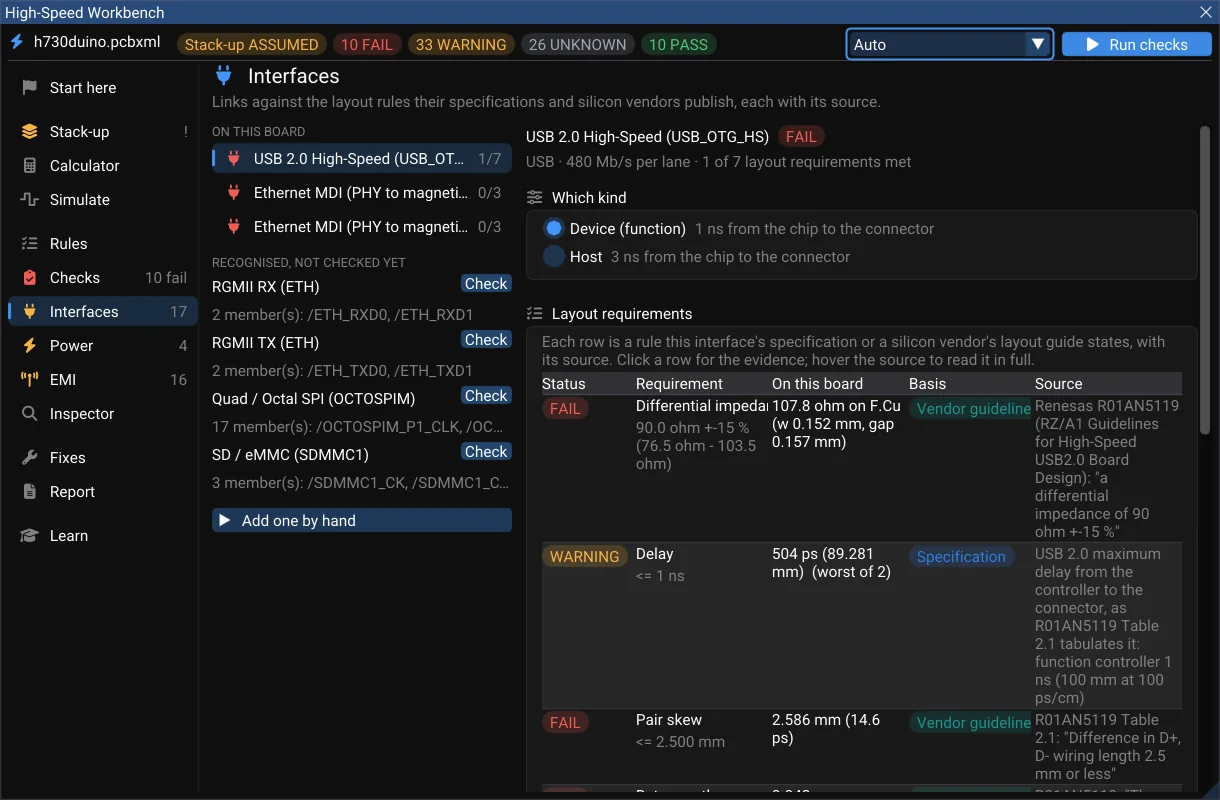
A USB pair at 107.8 Ω — high-speed checks that show their evidence

Running WireFrame's High-Speed Workbench on the open-source h730duino board — the USB 2.0 pair's impedance, skew and common mode, its EMI margin, and the fix — with the method and the source behind every number.