Sample board Jetson Nano baseboard — an 8-layer SO-DIMM carrier, opened in WireFrame EDA

Antmicro's open-source baseboard for the Jetson Nano and Xavier NX modules, imported from KiCad into WireFrame EDA — what is on its eight layers and what WireFrame measures on it.

Sample board Jetson Nano baseboard — an 8-layer SO-DIMM carrier, opened in WireFrame EDA

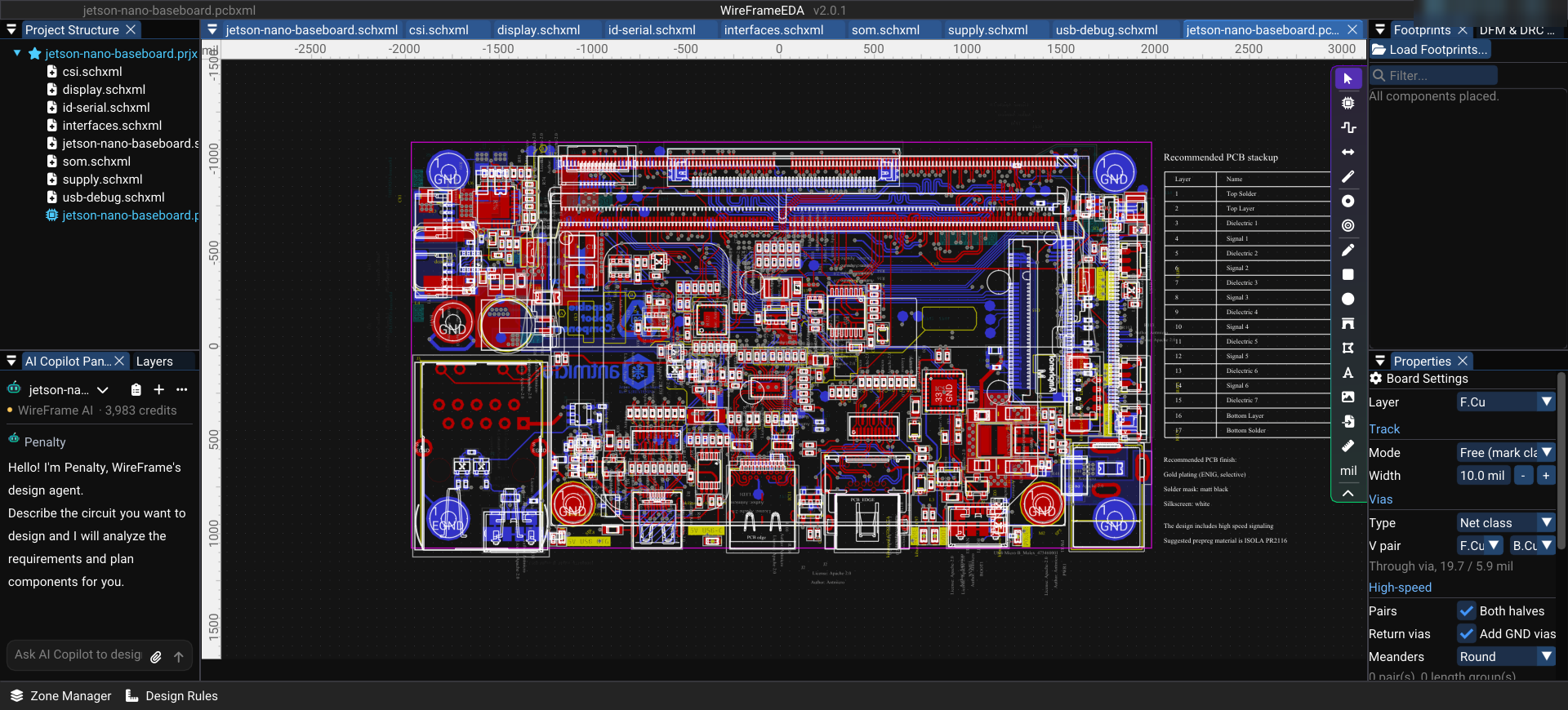
The Jetson Nano / Xavier NX baseboard is an open-source carrier by Antmicro for NVIDIA's SO-DIMM compute modules. On 100 × 55 mm it brings out a PCIe x4 M.2 slot, four MIPI CSI-2 camera inputs, HDMI and DisplayPort, Gigabit Ethernet and a 6–36 V input stage — on eight copper layers.

It sits between the small boards most people learn on and the ten-layer Jetson AGX Thor carrier: dense enough to need planes on every other layer, small enough to read in one sitting.

Opening it#

The repository is a KiCad 9 project (jetson-nano-baseboard.kicad_pro). File › Import › KiCad Project (.kicad_pro, .pro)… in WireFrame creates a WireFrame project beside it and leaves the KiCad files as they are.
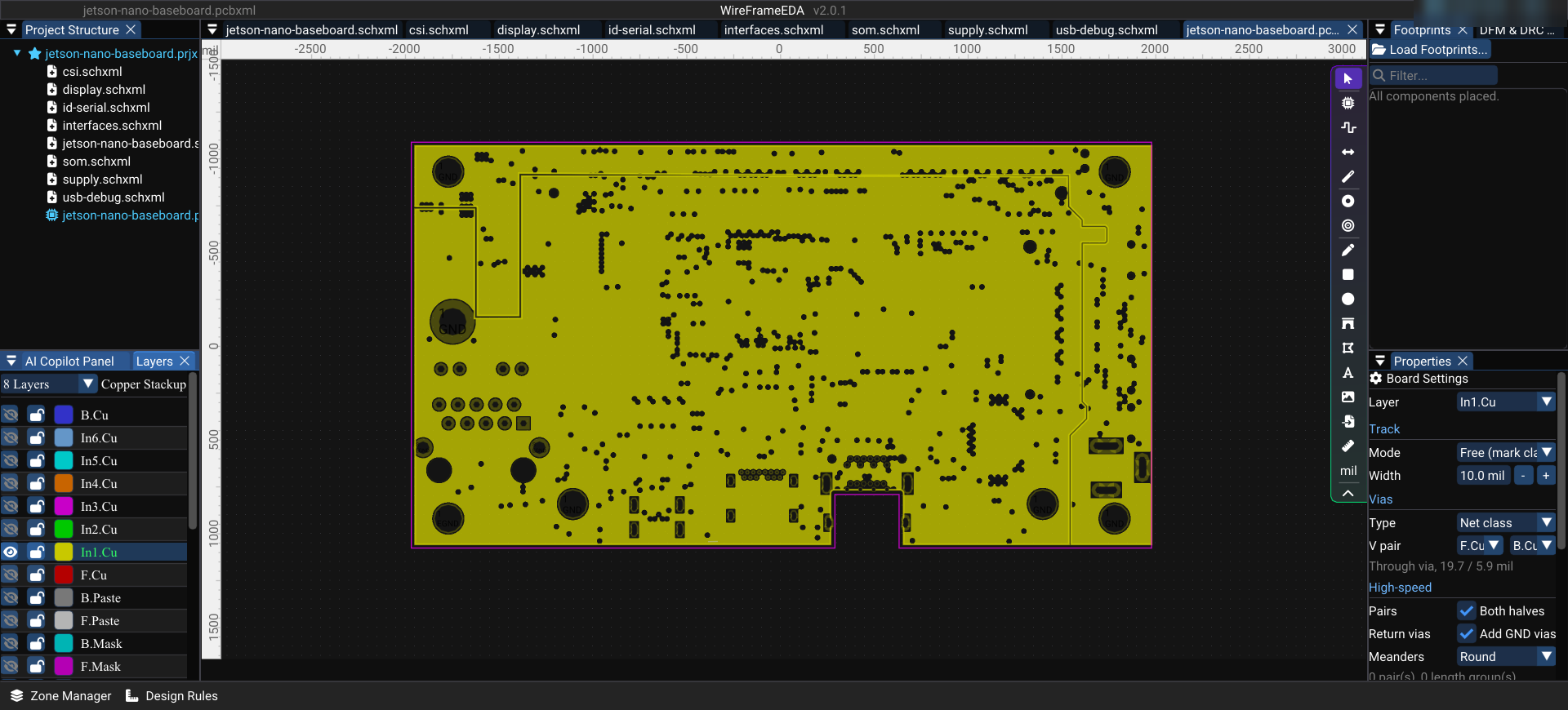
The Jetson Nano / Xavier NX baseboard in WireFrame EDA, all eight copper layers shown

For members

Keep reading — it’s free

Sign in or create a WireFrame account to read the rest of this post and every guide on the blog.

  • The rest of this post — about 1 min of reading
  • The same account signs in the WireFrame desktop app
  • Free design tools, no time limit

Sign in to WireFrame

One account for the desktop app and this site.
or with email
Forgot password?

Related posts

KiCad to WireFrame EDA and back: 72/72 round trips identical

Open a KiCad project in WireFrame EDA, work on it and export it back to KiCad: what comes across, what to check, and how the round trip was measured.

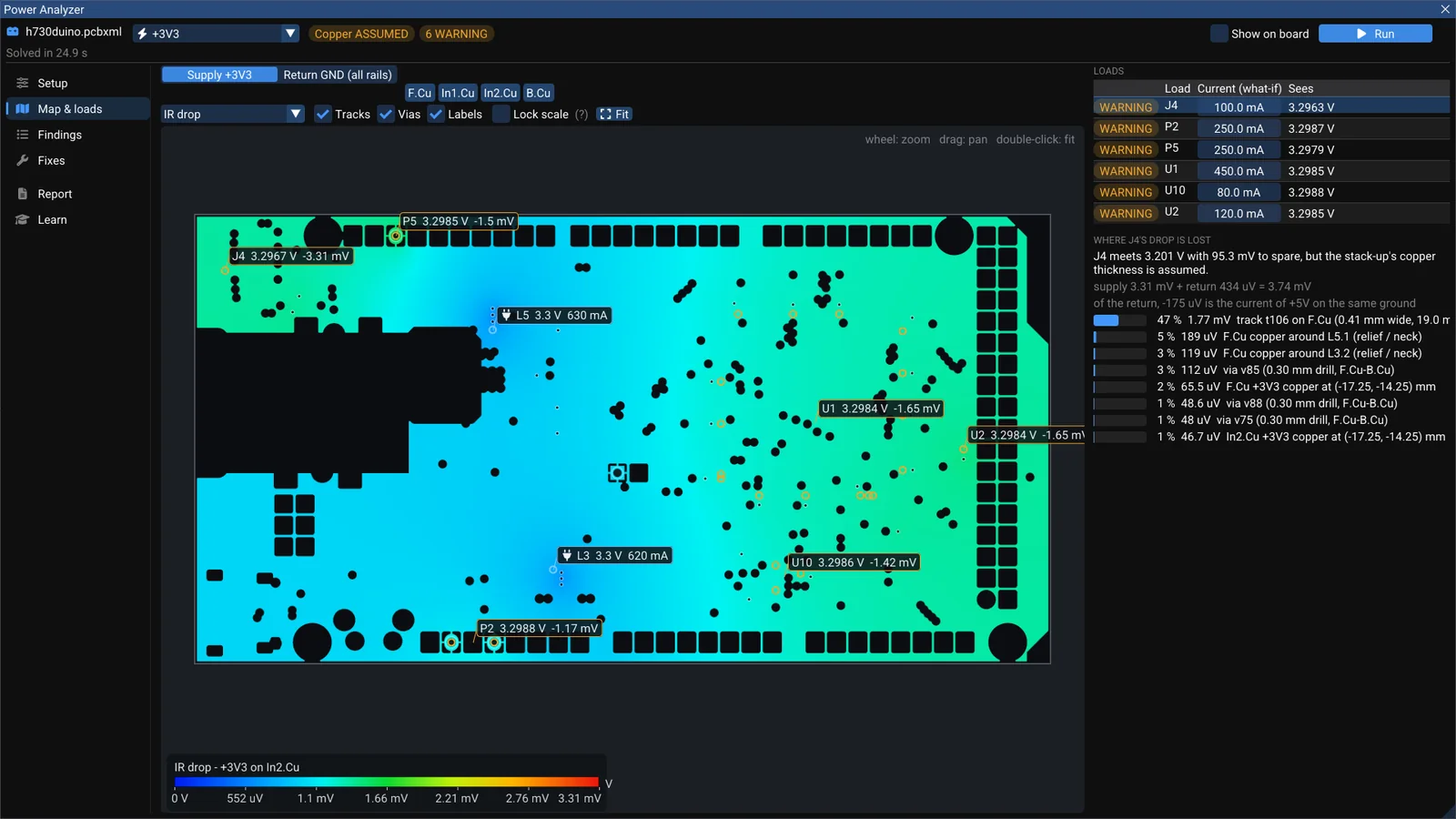
Where does your 3.3 V go? DC IR drop on a real board

WireFrame's Power Analyzer solves a rail's real copper — supply and return — and splits each load's voltage drop exactly over the tracks, necks and vias that cause it. A walk through the +3V3 rail of the open-source h730duino.

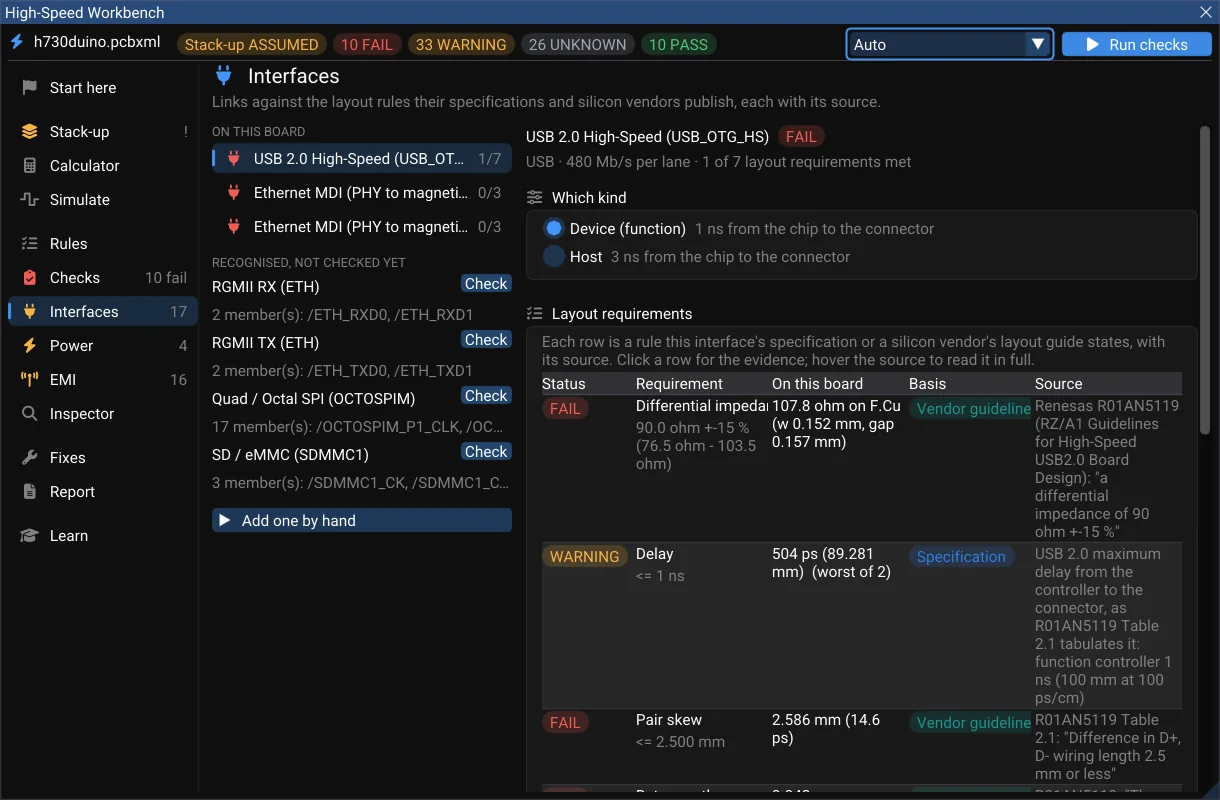
A USB pair at 107.8 Ω — high-speed checks that show their evidence

Running WireFrame's High-Speed Workbench on the open-source h730duino board — the USB 2.0 pair's impedance, skew and common mode, its EMI margin, and the fix — with the method and the source behind every number.