PCB design, AI & WireFrame
Practical guides on board design, high-speed routing, moving from KiCad, sample boards and AI-assisted electronics.
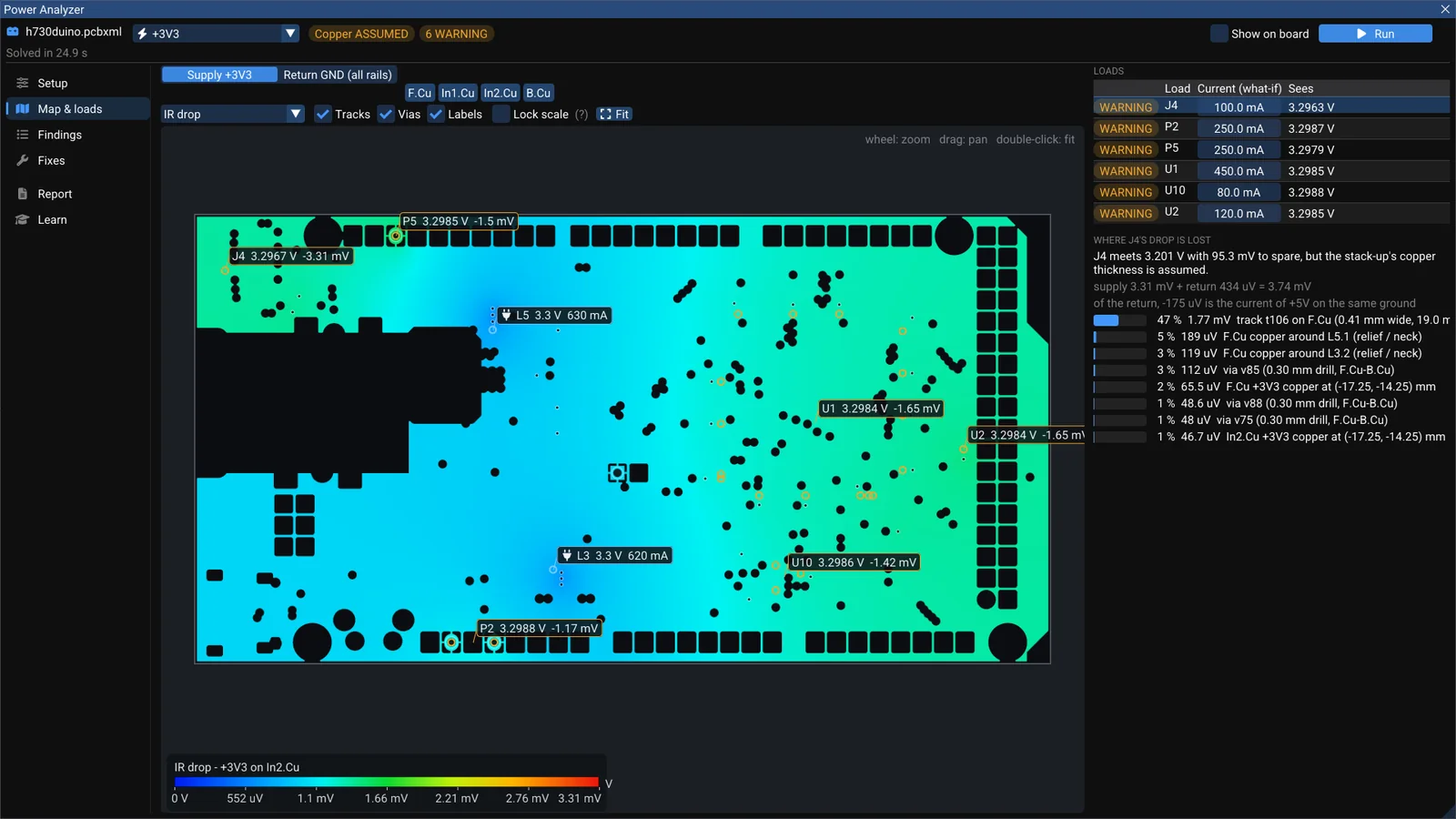
Where does your 3.3 V go? DC IR drop on a real board
WireFrame's Power Analyzer solves a rail's real copper — supply and return — and splits each load's voltage drop exactly over the tracks, necks and vias that cause it. A walk through the +3V3 rail of the open-source h730duino.
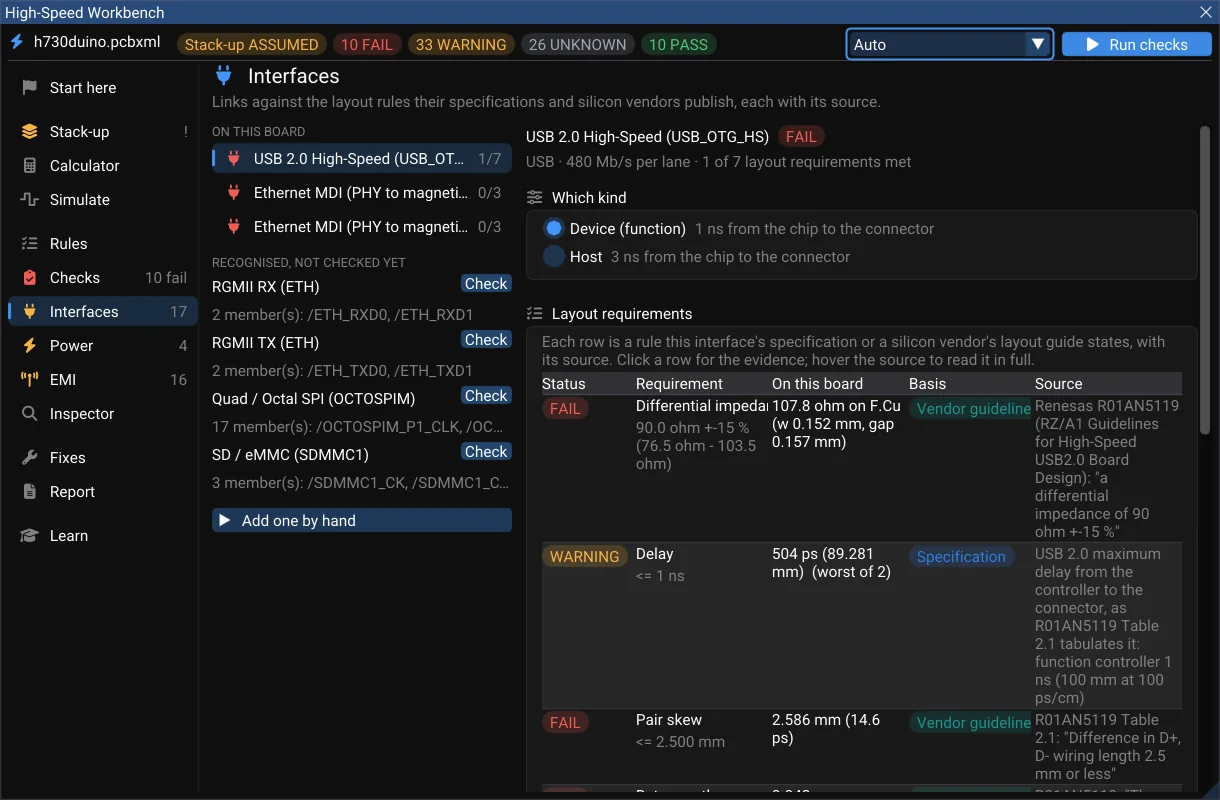
A USB pair at 107.8 Ω — high-speed checks that show their evidence
Running WireFrame's High-Speed Workbench on the open-source h730duino board — the USB 2.0 pair's impedance, skew and common mode, its EMI margin, and the fix — with the method and the source behind every number.
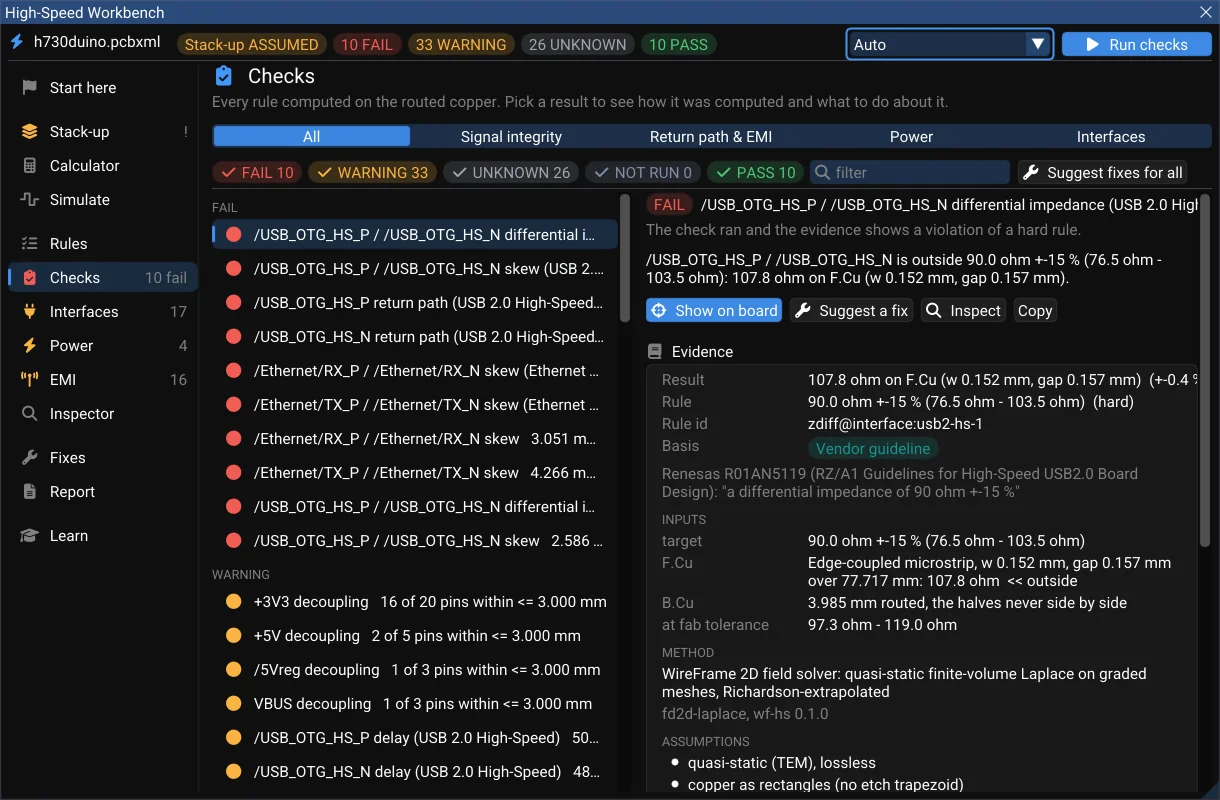
WireFrame EDA development update — October 2026
What WireFrame 2.0 brings, written in October 2026 before it shipped — the AI Copilot measured on 20 designs, a High-Speed Workbench and a Power Analyzer that show their evidence, multi-board products, KiCad/Altium/EasyEDA exchange, and what is still being built.
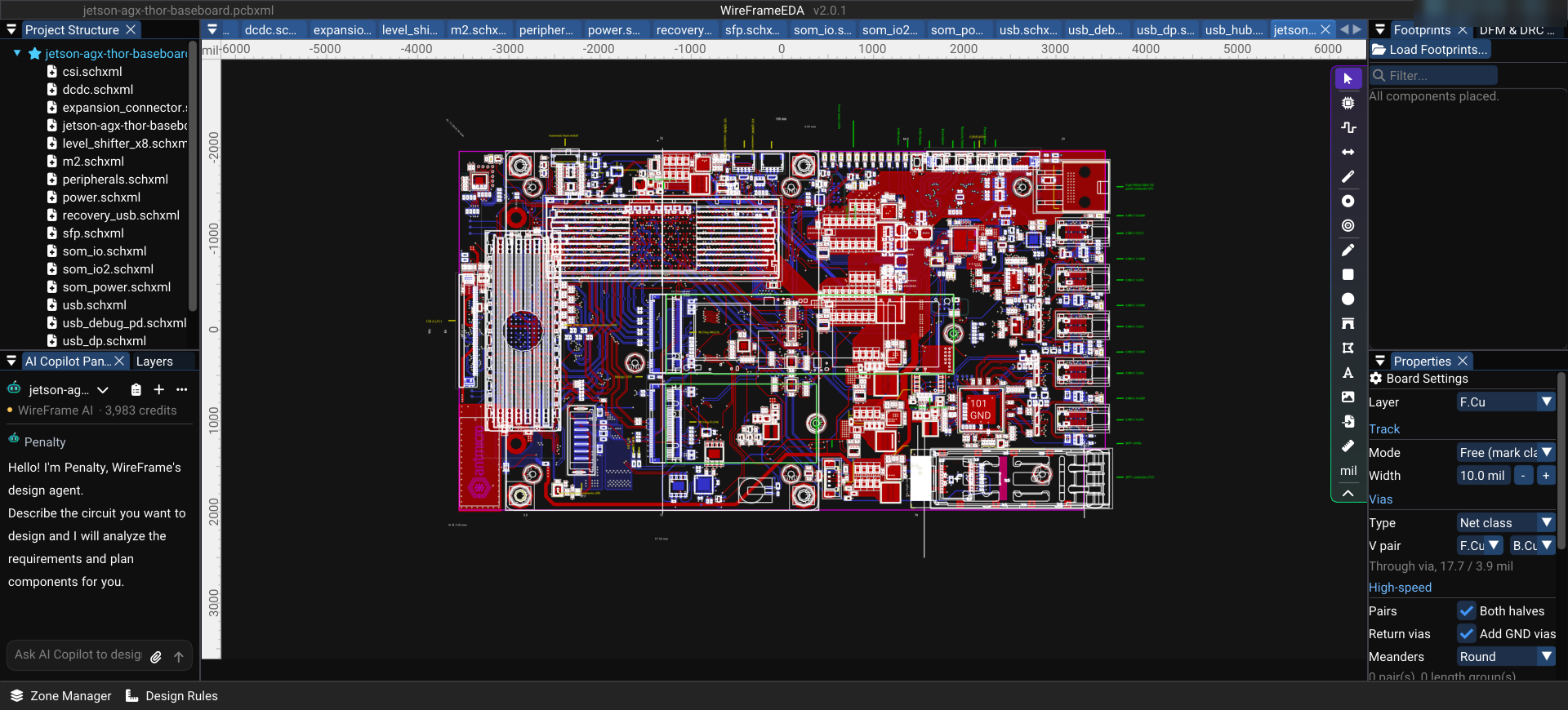
Sample board Jetson AGX Thor baseboard — 10 layers and 1124 parts, opened in WireFrame EDA
Antmicro's open-source carrier for the NVIDIA Jetson AGX Thor module, imported from KiCad into WireFrame EDA — its ten-layer stackup, length-tuned camera pairs and the numbers WireFrame measures on it.
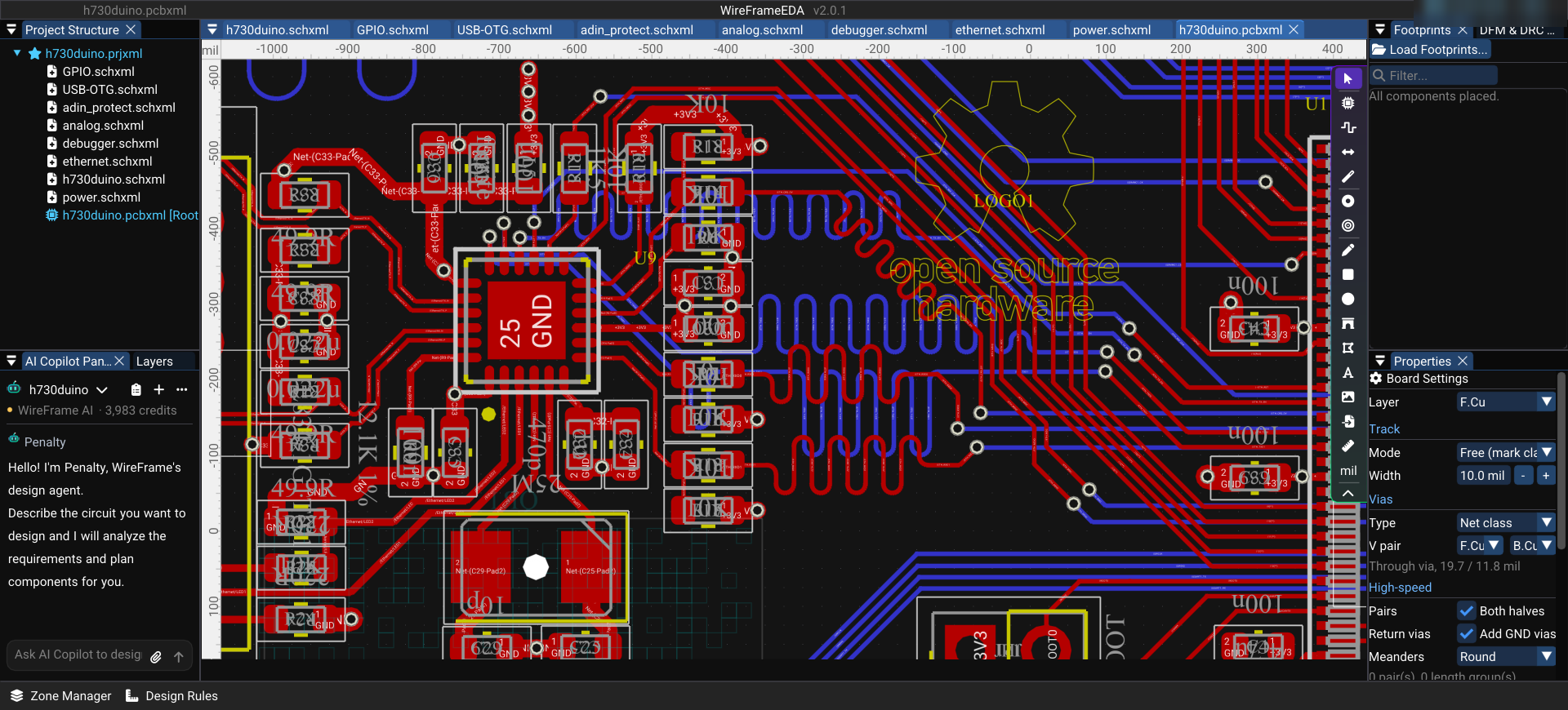
Length matching in practice — RMII and SDMMC on the H730duino
Measuring the real routed lengths of the RMII Ethernet and SDMMC traces on the open-source H730duino board: seven RMII signals matched within 0.02 mm. Why, and when you don't need to.